
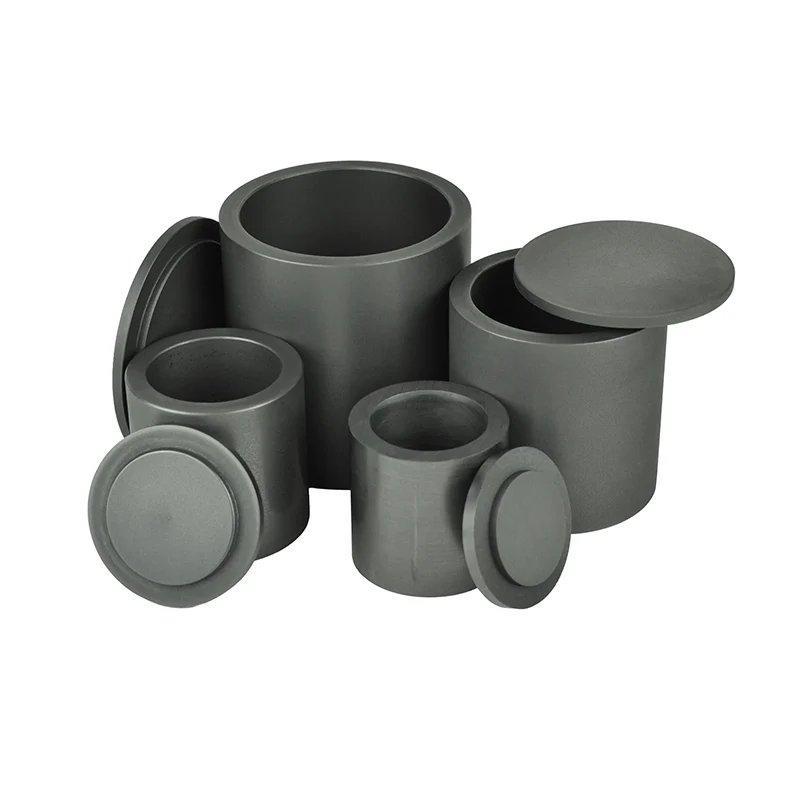
A crucible is a container that holds metal while it is melted, and it has to survive heat that would destroy most materials. A graphite crucible manufacturer makes those containers from graphite, a form of carbon that handles very high temperatures, resists chemical attack, and holds its shape when other materials would crack or soften.
This article explains what such a maker does, how a crucible is made, and what buyers should look for. It is written for anyone who buys crucibles for foundry or lab work and wants to understand the product behind the catalogue listing.
Why graphite suits a crucible
Graphite works for crucibles because it copes with heat in a way few materials can. It stays strong at the temperatures used to melt metal, it does not react easily with the molten metal inside it, and it handles fast heating and cooling without cracking the way brittle materials often do.
It also conducts heat well, so the metal inside melts evenly rather than staying cold in the middle while the edges overheat. That even heating matters in a foundry, where a bad melt wastes time, fuel, and material. A well-made graphite crucible gives the operator a steady, predictable melt, run after run.
How a crucible is made
Making a crucible starts with graphite powder, which is mixed with a binder, shaped under pressure, and then baked at high temperature until it becomes a solid, dense form. The shape matters as much as the material: the walls must be even, the base must sit flat, and the rim must be strong enough to lift with tongs.
After shaping, the crucible is machined to its final size and checked for cracks, thin spots, and surface flaws. A maker who skips these checks will ship crucibles that fail early, often at the worst moment, so the inspection step is where a good manufacturer earns its name.
The sizes and types buyers meet
Crucibles come in many sizes, from small ones used in labs to large ones that hold a full furnace charge. The size you need depends on how much metal you melt at once and on the furnace you use, so it is worth matching the crucible to the furnace rather than buying the biggest one you can find.
There are also differences in the graphite itself. Some crucibles are made for general melting, while others are made for metals that need extra purity or for work that involves repeated heating and cooling. A good supplier will ask what metal you melt and how often you run the furnace, then point you to the right type.
- Match the crucible size to your furnace, not just your melt.
- Tell the supplier which metal you melt and how often.
- Ask how the crucible is inspected before it ships.
Choosing a maker you can rely on
When you choose a manufacturer, look past the catalogue and ask about the material, the making process, and the checks each crucible goes through. A maker who can explain these things plainly is usually one who controls them properly, while vague answers are a warning sign.
It also helps to ask about consistency between batches. A crucible that works well once is not enough if the next batch behaves differently. Ask for references from buyers who use the same sizes you need, and start with a small order to test the product in your own furnace before you commit to a larger one.
How long a crucible lasts
How long a crucible lasts depends on how it is used. Gentle heating and cooling, careful handling with tongs, and a furnace that is kept clean will all stretch its life. Rough handling, fast temperature swings, and leaving slag to build up inside will shorten it, sometimes sharply. The graphite crucible manufacturer you buy can only do so much; the way it is treated decides the rest.
It helps to keep a simple record of how many melts each crucible handles, so you can spot when one is wearing out before it fails during a melt. A crucible that is thinning at the base or showing cracks around the rim should be retired, even if it still looks usable. Replacing it a little early is far cheaper than losing a full melt and cleaning up the mess afterwards.
A graphite crucible manufacturer turns graphite into a container that can be trusted with molten metal: shaped well, baked properly, and checked before it ships. Know your metal, your furnace, and your volumes, ask the plain questions, and the right maker will stand out quickly. That is the mark of a maker worth working with. Start small, test the product in your own furnace, and build the relationship from there, because a supplier who performs well on a small order is the one you can trust with a large one.
