
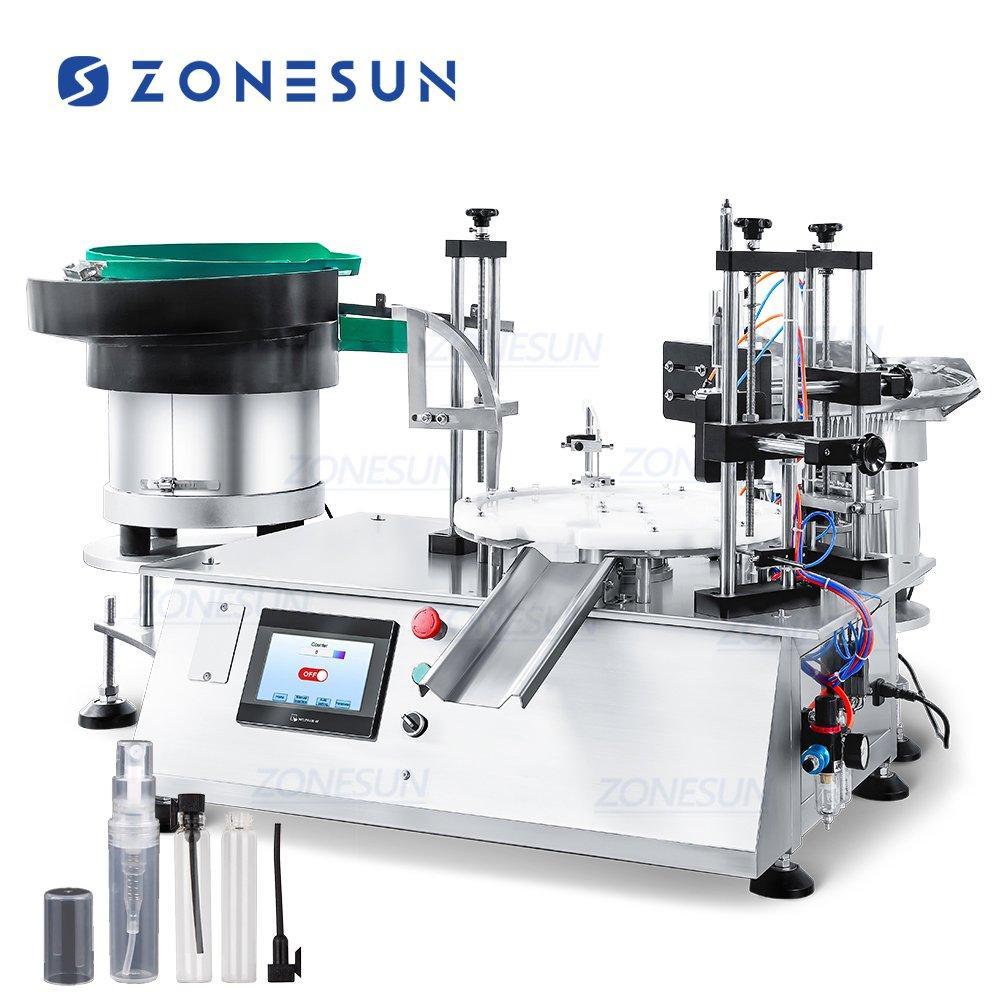
A machine that fills a bottle and puts the cap on, in one continuous process, is called filling capping, and the bottle never leaves the line while it happens. It is a common sight in drinks, cosmetics, and pharmaceutical plants, where bottles move along a conveyor, get filled to the right level, and then get a cap pressed or screwed on, all in a few seconds. It saves space, saves time, and keeps the product clean.
The idea is simple, but the machine has to do two very different jobs well. Filling is about accuracy, and capping is about force and alignment, and the machine has to switch between them without stopping. This article explains how these machines work, and where they fit on a production line.
How the machine fills the bottle
The bottle arrives on the conveyor, empty and clean, and is positioned under the filling nozzle. The machine fills it to a set level or a set volume, using a pump or a gravity system, depending on the product. Thick liquids need a different approach from thin ones, and foaming products need to be filled slowly to avoid spilling. A good filling capping machine can be adjusted for all of these, because the same line may fill several products in a week.
Accuracy matters here. A bottle that is overfilled wastes product, and one that is underfilled cheats the customer and breaks the rules. The machine is set to a target, and the operator checks the first bottles of every run to make sure it is hitting it. Once it is set, it should hold that level all day, as long as the product stays the same.
How the machine caps the bottle
After filling, the bottle moves to the capping station, where a cap is placed on the neck and pressed or screwed down. The cap has to sit straight and grip tightly, and the force has to be right for the cap and the bottle. Too little force and the cap comes loose in transit; too much and the bottle cracks or the cap deforms. The machine lets the operator set that force, and hold it steady across the whole run.
Different caps need different handling. A screw cap needs to be turned, a press-on cap needs to be pushed, and a pump or spray cap needs to be handled gently so it is not damaged. A machine that can handle several cap types is more useful than one built for a single cap, especially on a line that packs different products. Changeover should be quick, with the parts that need swapping clearly marked.
- Check the first bottles of every run for fill level
- Set the capping force for the cap in use, not the last one
- Keep caps clean and dry before they reach the machine
Why combine filling and capping in one machine
The main reason is space. Two separate machines need two places on the line, two operators, and a conveyor between them. A filling capping machine does both jobs in one footprint, which matters in a small factory where floor space is limited. It also means the bottle is handled less, and every time a bottle is moved, there is a chance of a spill or a knock.
Speed is the other reason. A combined machine can be faster than two separate ones, because there is no gap between filling and capping. The bottle moves straight from one station to the next, and the line runs at the speed of the slower station rather than the speed of two machines plus a transfer. For a producer filling thousands of bottles a day, that difference adds up quickly.
Where these machines are used
Drinks producers use them for water, juice, and sauces. Cosmetic makers use them for creams, lotions, and shampoos. Pharmaceutical plants use them for syrups and small-dose liquids. Anywhere a liquid goes into a bottle and needs a cap, a filling capping machine is worth considering, especially when the volumes are high enough to justify the investment.
The machines come in sizes to suit the producer. A small semi-automatic machine suits a business filling a few hundred bottles a day, while a fully automatic line suits a factory filling thousands. The right size is the one that matches your current volumes, with room to grow, rather than the biggest machine you can afford.
A filling capping machine is a practical answer to a practical problem: fill the bottle accurately, cap it tightly, and do both without moving the bottle or wasting space. They suit any producer who fills liquids into bottles at real volume, and they pay for themselves in speed, consistency, and floor space.
If you are setting up a line, start with the bottle and the cap, then match the machine to them. Get the fill level and the capping force right, and the machine will do its two jobs quietly, bottle after bottle, all day.
