
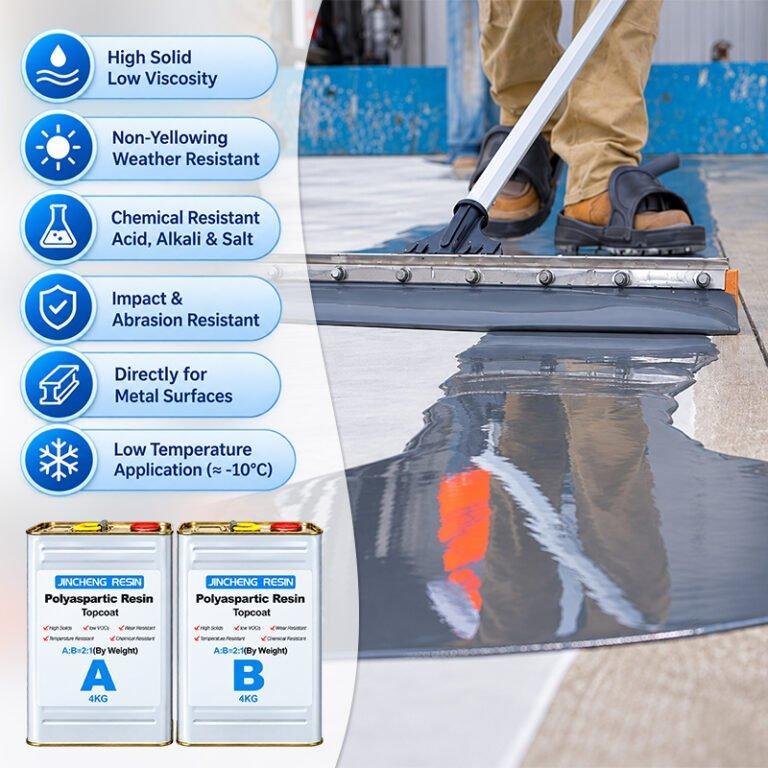
Walk into a workshop with a clean, glossy concrete floor and the surface you are looking at is probably the top layer of a coating system, not the concrete itself. A polyaspartic topcoat is that outer layer: a hard, clear or coloured finish made from polyaspartic resin, spread over a primer and a base coat to seal the whole system. It is the part of the floor that takes the scuffs, the spills and the sunlight, and it decides how the floor looks and how long it lasts.
Polyaspartic resin belongs to the same family of chemistry as the resins used in polyurethane coatings, but it cures much faster and holds its colour better in sunlight. That combination is why it has become a popular choice for garage floors, workshops, showrooms and outdoor concrete. This article explains what the coating is made of, how it hardens, what it protects against, and where it makes sense to use it.
The layers underneath the topcoat
A floor coating is built in layers, and the topcoat is the last one on. The primer goes down first and soaks into the concrete so the system has something to grip. Over that comes a base coat, often an epoxy, which builds thickness and can carry colour or decorative flakes. The topcoat then seals the whole stack and gives the floor its final surface.
That order matters because each layer has a job the others cannot do. The primer handles adhesion, the base coat handles body and looks, and the topcoat handles wear. If the topcoat is missing or worn away, the softer layers below are exposed to traffic and chemicals they were never meant to face on their own. A polyaspartic topcoat used as that final layer keeps the whole system working as a team rather than as separate coats.
How the resin hardens into a solid film
Polyaspartic coatings are supplied as two parts that are mixed just before use. One part holds the resin, the other holds the hardener, and once they meet, a chemical reaction starts that turns the liquid into a solid film. The reaction runs quickly, which is why these coatings are known for fast curing, and it is also why the material has to be mixed in small batches and spread without delay.
As the film hardens it forms a tight, cross-linked surface that resists scratches, stains and many chemicals. Products in the Jincheng range are listed with high solids content, low viscosity and strong self-levelling, which means the liquid flows out flat instead of holding roller marks. One product in the range is listed at 85% solids. The result is a smooth, hard skin that is easy to sweep and mop, and that keeps its gloss instead of going dull under foot traffic.
What it protects the floor from
The main job of any topcoat is protection, and a polyaspartic topcoat is built for the harder end of that work. It stands up to abrasion from feet, wheels and dragged equipment, and it resists the oil, fuel and cleaning chemicals that mark up bare concrete. Because the resin is aliphatic, it also resists yellowing in sunlight far better than many older coatings, which is why it is used on outdoor concrete and parking areas as well as indoors.
The surface it leaves behind is dense and easy to clean, so dust and spills sit on top of it instead of soaking in. That matters in a workshop where oil drips are part of the day, and in a showroom where the floor is part of the display. It also helps with safety: the finish can be given texture so the floor is less slippery when wet, which is worth planning for in any area where water or spills are likely.
- Abrasion from feet, wheels and dragged equipment
- Stains and spills, including oil and cleaning chemicals
- Sunlight and weather on outdoor concrete
- Everyday wear that would dull an unprotected base coat
Where it fits best
This kind of coating earns its keep where floors work hard. Industrial floors and workshops put it through abrasion, machinery movement, oil spills and regular cleaning. Commercial floors and showrooms need it to stay good-looking as well as tough. Outdoor concrete and parking areas need the weather resistance, since they face sun and rain as well as vehicles.
It is still only one layer in a system, so it has to suit what is underneath it. The supplier will want to know the floor type, the primer and base coat already in place, and how the floor will be used before recommending a product. Getting those details right at the start is what makes the difference between a floor that lasts and one that peels. Ask for the technical data sheet, and test a sample on your own floor before ordering in bulk.
A polyaspartic topcoat is a fast-curing, hard-wearing finish that sits on top of a floor coating system and takes the punishment so the layers below do not have to. It resists scratches, stains, chemicals and sunlight, it levels out to a smooth cleanable surface, and it suits garages, workshops, showrooms and outdoor concrete. Understand what it is, match it to the floor and the conditions, and it will do its job for years.
