
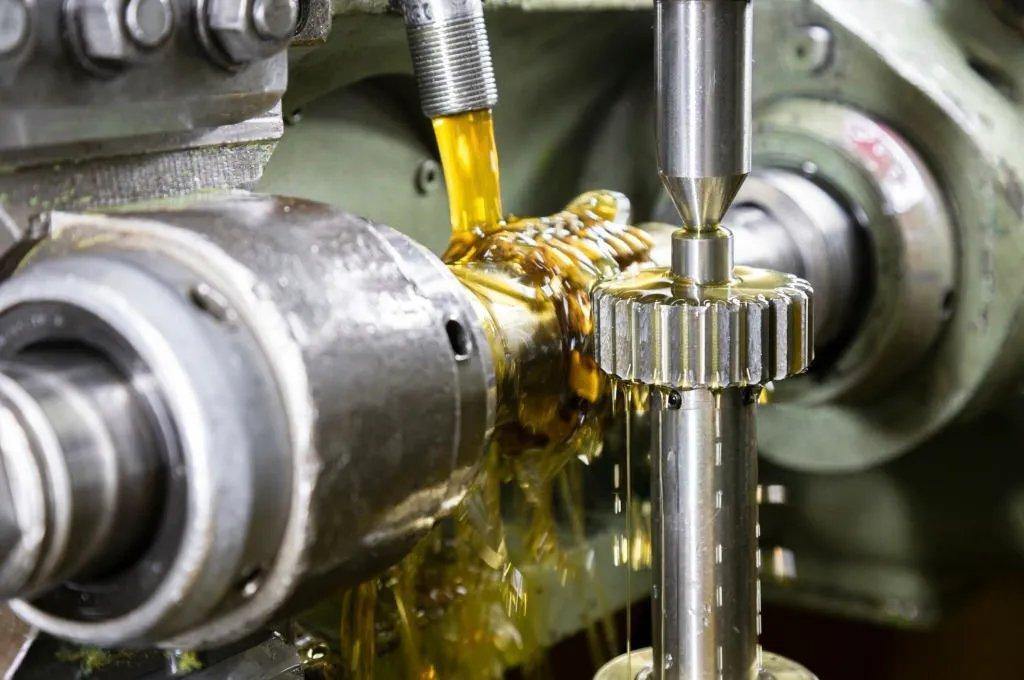
Every factory has machines that spin, slide, press and pump, and almost all of them depend on oil. industrial oil is the broad name for the lubricants used in those machines: hydraulic oil, gear oil, compressor oil, turbine oil and more, each made for a particular job inside a particular kind of equipment.
It is easy to think of oil as a single product, but the range is wide and the differences matter. The wrong oil in a hydraulic system or a gearbox can cause wear, overheating or a breakdown that stops a whole line. The industrial oil you choose has to match the machine, the load and the temperature it works in.
The main types and what they do
Hydraulic oil is the fluid that carries power in hydraulic systems, moving pistons and motors while also lubricating and cooling the parts it touches. It needs to stay stable across a wide temperature range and resist wear under high pressure. Gear oil, by contrast, is made for enclosed gearboxes and transmissions, where it has to keep a strong film between teeth that press together under heavy loads.
Other types cover more specialised jobs. Compressor oil protects the moving parts of air compressors and resists the deposits that form under heat. Turbine oil serves bearings and circulating systems in turbines, where it must separate from water and resist oxidation over long running hours. Each type is a different answer to a different problem.
What makes one oil better than another
The base of the oil matters first. Mineral oils suit many ordinary jobs and cost less, while synthetic oils handle higher temperatures, last longer and perform better in extreme conditions. The choice between them depends on how hard the machine works and how often you are willing to change the oil.
Additives do the rest of the work. Anti-wear additives protect surfaces under load, antioxidants slow the breakdown of the oil itself, and rust inhibitors guard parts that sit idle between shifts. A good industrial oil is a careful blend of base oil and additives, tuned for the machine it will serve rather than made to suit everything at once.
Choosing the right oil for a machine
The safest starting point is the machine maker’s recommendation. It will name a viscosity grade and a specification, and matching those is more important than the brand on the drum. Viscosity decides how thick the oil is at working temperature: too thin and it cannot protect the parts, too thick and it wastes energy and runs hot.
After the grade, think about the conditions. A machine that runs outdoors in winter needs oil that still flows when cold. One that runs hot all day needs oil that resists oxidation. The industrial oil that fits is the one that matches the grade, the temperature and the duty — and when in doubt, ask the supplier to confirm the choice in writing.
- Match the viscosity grade the machine maker specifies
- Pick mineral or synthetic to suit the temperature and the service interval
- Check the additives: anti-wear, antioxidant and rust protection
- Consider the working conditions, not just the machine on paper
Looking after oil once it is in service
Choosing the right oil is only half the job. Oil in service picks up water, metal particles and oxidation products, and it slowly loses its additives. Regular checks — looking at the colour, testing for water, and watching for changes in temperature or noise — catch problems before they become breakdowns.
Change the oil on a schedule that suits the machine, not on a guess. A machine that runs around the clock in a dusty hall needs more frequent changes than one that runs a few hours a week in a clean room. Good industrial oil, checked regularly and changed on time, is one of the cheapest forms of insurance a factory can buy.
Storing oil properly
Oil that is stored badly can be ruined before it is ever used. Drums left outside in the rain can take in water through the bungs, and drums stored on their sides in the sun can expand and leak. Keep drums indoors or under cover, standing upright, with the labels facing out so the grade is easy to read.
Cleanliness matters at the point of use as well. A dirty funnel or an open drum can introduce dust and water into oil that was clean when it left the supplier. Use clean, dedicated equipment for each grade, keep drums sealed when they are not being used, and use the oldest stock first. Good storage protects the oil, and clean oil protects the machines.
What industrial oil means in practice is not a single product but a family of lubricants, each built for a specific machine and a specific job. The differences between hydraulic, gear, compressor and turbine oils are real, and choosing well comes down to matching the grade, the base and the additives to the machine and its conditions. Get that match right, keep the oil clean and change it on time, and the machines will repay you with long, trouble-free service.
