
Table of Contents
- Foundation of Infrastructure Planning
- Ensuring Legal Compliance and Property Rights
- Environmental Stewardship and Sustainable Development
- Technological Advancements in Land Surveying
- Enhancing Public Safety and Risk Management
- Collaboration with Other Professionals
- Educational Initiatives and Future Outlook
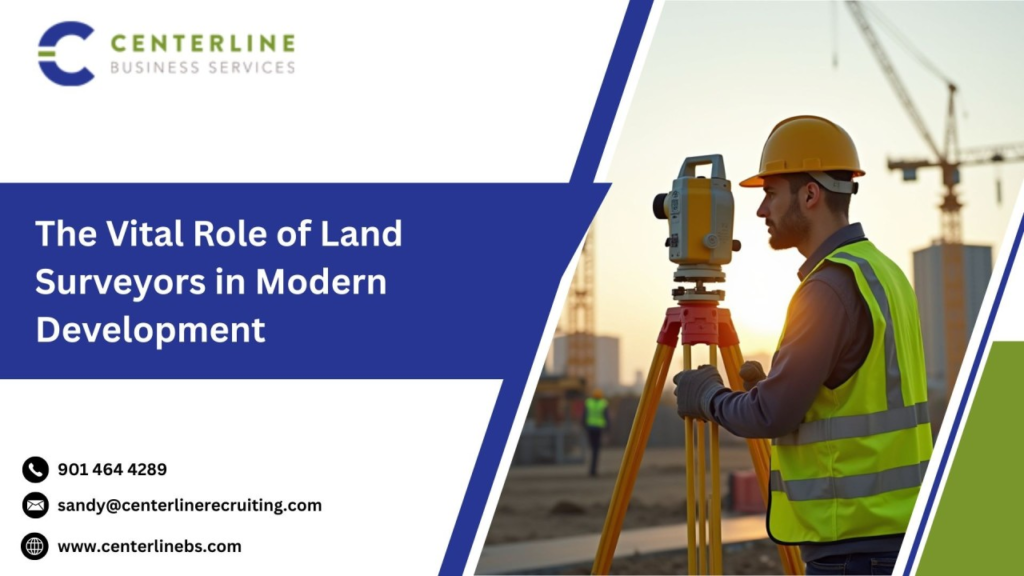
Modern community development relies heavily on accurate planning, data, and spatial understanding—and land surveying plays a central role in that process. From determining precise property boundaries to mapping topography and infrastructure, surveyors provide the foundational information that guides safe and efficient growth. Their work supports a range of projects, from housing developments and transportation systems to environmental preservation, ensuring that projects align with both design goals and regulatory standards.
As communities expand and land use becomes more complex, the importance of precise surveying continues to grow. For instance, land surveying in Loudoun County, VA, demonstrates how advanced techniques, such as GPS mapping and drone-based imaging, are being utilized to manage urban expansion while maintaining environmental balance. These practices demonstrate how accurate data collection helps create sustainable, well-organized spaces that serve both present and future needs.
Foundation of Infrastructure Planning
Every successful building project begins with a comprehensive understanding of the land. Surveyors collect data on property contours, boundaries, and elevations—information that is indispensable for designing roads, utilities, and flood controls. For example, civil engineers use elevation data from surveys to ensure stormwater drains away, protecting structures and reducing costly repairs down the line. The American Society of Civil Engineers emphasizes the importance of such foundational data for infrastructure modernization and sustainable urban development.
Planning around accurate surveys means fewer construction delays, less environmental harm, and reduced expenditures over the project’s lifespan. In fast-growing counties and cities, precision in early planning stages can shape decades of prosperity and growth.
Ensuring Legal Compliance and Property Rights
Surveyors play a crucial role in maintaining clear and secure property boundaries, which are essential for robust markets and thriving neighborhoods. They verify that boundaries match deeds, codes, and standards through mapping boundaries, easements, and rights-of-way. Their precise work helps prevent legal conflicts, encroachment, and zoning violations, thus supporting property deals, public projects, and urban renewal efforts. Compliance with legal requirements is vital—zoning violations and disputes can hinder development and fragment communities. Surveys provide legally recognized, evidence-based solutions that can resolve issues both in court and negotiations.
Environmental Stewardship and Sustainable Development
Sustainable development depends on understanding the landscape—its risks, natural resources, and ecological sensitivities. Surveyors frequently map wetlands, waterways, and protected areas, allowing planners to avoid critical habitats and design environmentally responsible projects. This due diligence ensures regulatory compliance and promotes biodiversity. Such balance is increasingly essential as communities strive for green growth and climate resilience.
Surveyors’ work also supports smart growth strategies—such as preserving open spaces, designing efficient public transportation routes, or integrating green roofs—which reduce the urban heat island effect and enhance community well-being.
Technological Advancements in Land Surveying
The transition from tape measures to advanced technology has improved data accuracy, reduced human error, and accelerated project timelines. Drones gather aerial images from hard-to-reach sites. Geographic Information Systems (GIS) store, analyze, and visualize complex spatial data. GPS provides fast, pinpoint accuracy needed for significant developments or intricate urban projects. These digital tools enable surveyors to create detailed, interactive maps that inform everyone from architects to emergency planners, thereby increasing the efficiency and reliability of projects, both large and small.
This wave of innovation has also made land surveying more accessible for community planning, conservation programs, and disaster response planning.
Enhancing Public Safety and Risk Management
Land surveyors help foresee and prevent health, safety, and environmental risks. Elevation and drainage assessments identify areas prone to flooding or landslides, guiding on-the-ground decisions that protect people and infrastructure. By mapping these dangers and incorporating them into city plans, surveyors enable communities to prepare for and mitigate the impact of natural disasters.
Material waste is also minimized, and construction timelines are streamlined because crews can anticipate site conditions more accurately when precise data is at hand.
Collaboration with Other Professionals
A wide range of professionals rely on surveyors, including architects, engineers, environmental consultants, and government officials. Surveys provide a shared foundation for decision-making, helping to align objectives and standards at every project phase. This collaboration is vital for efficient use of resources, compliance with environmental and safety regulations, and smart, sustainable growth. Urban planners, in particular, rely heavily on surveys to inform policies that determine zoning, permitted density, and land use—all of which significantly influence the long-term character of communities.
Educational Initiatives and Future Outlook
The future of land surveying lies at the intersection of technology and societal needs, with a growing emphasis on education in environmental science, digital modeling, and smart-city development. Surveyors play a crucial role in creating “digital twins” of cities, which enable real-time testing and emergency response. This highlights the profession’s significance in promoting climate resilience, enhancing urban livability, and supporting innovative policies. As the field continues to develop, ongoing education is crucial for surveyors to adapt to new challenges in evolving environments.
Conclusion
In conclusion, land surveying forms the backbone of responsible and innovative community development. Through their skill, depth of knowledge, and commitment to accuracy, surveyors empower communities to build with clarity, safeguard public interests, and adapt to future challenges—ensuring communities are not just places to live, but places to thrive.
