
Key Takeaways
- Stress may look like hiding, pacing, panting, barking, shaking, chewing, or changes in normal habits.
- A quiet resting area, predictable routines, and appropriate enrichment can help a dog cope.
- Reward-based training and gradual exposure are safer choices than punishment or forced exposure.
- Sudden, severe, or worsening behavior changes should be discussed with a veterinarian.
Dogs can feel unsettled for many reasons, including loud sounds, visitors, separation, travel, pain, or changes in the household. While some families explore options such as cannabis products online, no product should replace careful observation, a safe environment, or veterinary guidance for a fearful dog. Stress is not proof that a dog is poorly trained or has a bad personality. It is useful information that something in the dog’s surroundings, body, or routine may be difficult to handle. Small, consistent changes can make daily life feel more secure. A dog’s response can also vary by situation: a pet who is relaxed at home may still struggle around unfamiliar dogs, busy streets, or new handling routines. Looking at the full context helps families respond with patience rather than assuming the behavior is deliberate disobedience.
Recognize Common Signs Of Stress
Some signs are obvious, but others are easy to miss. Watch for patterns rather than judging one isolated behavior. A stressed dog may show:
- Heavy panting when the weather is mild, and exercise has stopped.
- Pacing, trembling, freezing, hiding, or repeated attempts to leave an area.
- Lip licking, yawning, lowered posture, pinned-back ears, or avoiding eye contact.
- Whining, barking, growling, clinginess, chewing, digging, or scratching at exits.
- Changes in appetite, sleep, bathroom habits, play, or comfort around familiar people.
One signal alone does not always mean a dog is anxious. A yawn can mean tiredness, for example, and panting may occur after normal activity. Concern rises when several signs appear together, occur repeatedly in the same setting, or the dog has trouble returning to normal afterward. Notice whether the dog can take treats, respond to familiar cues, or choose to rest; these details can help show whether the situation is manageable or too intense.
Find The Trigger Before Choosing A Solution
Guessing can lead to solutions that do not address the real problem. Keep a short journal for several days and record what happened immediately before your dog became uncomfortable. Include the time, location, people or animals present, sounds, activity, reaction intensity, and the recovery time. Common triggers include storms, fireworks, unfamiliar visitors, grooming, car rides, veterinary visits, moving, separation, conflict in the home, unfamiliar dogs, and physical discomfort. Preparing for predictable events can reduce pressure, and guidance on handling stressful situations for pets emphasizes noticing early signs and having a plan in place before distress escalates.
Try to identify the earliest point at which your dog becomes uneasy. For one dog, that may be hearing the doorbell; for another, it may be seeing a coat picked up before a walk or noticing a person approach from a distance. Catching the first signs makes it easier to create space, redirect attention, or end the interaction before the dog feels trapped or overwhelmed.
Create A Calm Area At Home
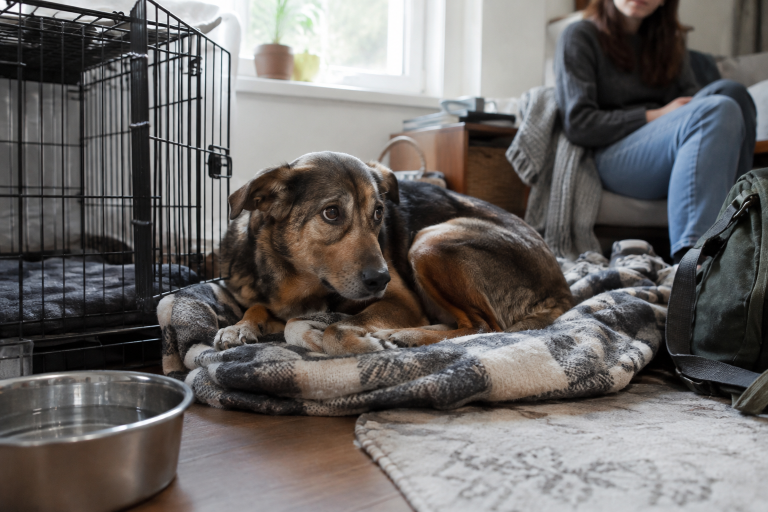
Set aside a quiet space where your dog can rest without being bothered. This may be an open crate, a corner of a bedroom, or a room away from the front door and noisy appliances. Add a comfortable bed, a familiar blanket, water, and a dog-safe chew or food toy if appropriate.
- Use curtains, soft lighting, or steady background sound when outside activity is intense.
- Keep the area open and inviting. Never send the dog there as punishment.
- Let the dog leave when ready instead of holding them in place.
- Prepare the space before guests arrive, a storm starts, or fireworks are expected.
Make sure children and visitors understand that the resting area is off-limits while the dog is using it. A safe area works best when it is available during calm moments too, not only when something frightening happens. If a crate has previously caused distress, choose another quiet setup rather than assuming every dog will find crate confinement comforting.
Build A Steady Routine And Use Enrichment
Dogs often benefit when meals, walks, play, and rest happen within a familiar time range. The goal is not a rigid schedule. It is giving the dog enough predictability to understand what usually happens next. Protect uninterrupted nap time, use consistent cues for everyday routines, and introduce major changes gradually when possible. Enrichment is not simply intense exercise. It can meet a dog’s needs for sniffing, searching, chewing, learning, moving, and resting. Ideas include scattering part of a meal in a safe area, offering a food puzzle suited to the dog, rotating toys, practicing easy training games, and taking slow sniff-focused walks. These forms of enrichment supporting a dog’s mental wellbeing at home can provide calm, purposeful activity. Match the activity to the individual dog and the moment. A high-energy game may be enjoyable for some dogs, but it may make an already overstimulated dog less able to settle. When stress is high, lower-key choices such as sniffing in a quiet area, licking food from an appropriate toy, or calmly searching for scattered kibble may be a better fit.
Practice Reward-Based Coping Skills
Teach coping skills in small steps, before fear becomes overwhelming. Start with a mild version of the trigger, then pair it with something the dog enjoys, such as tiny treats, a favorite toy, or a calm sniffing activity. End the session while the dog is still comfortable.
- Choose a low-intensity version of the trigger.
- Offer a reward while the dog remains relaxed.
- Repeat short sessions over several days.
- Increase the challenge only when the dog is coping well.
For example, play a very quiet recording of thunder, stand near a parked car, or practice picking up keys before a brief departure. Forcing a frightened dog to endure the full trigger can intensify fear.
Progress should be based on the dog’s body language, not a calendar. If the dog stops taking food, stiffens, tries to leave, or shows other signs of distress, reduce the difficulty at the next session. It is often more helpful to complete several easy, successful repetitions than to push for a longer or harder practice session. Avoid corrections, intimidation, and tools intended to cause discomfort, since fear-based behavior needs safety and skill-building rather than punishment.
Help With Separation, Storms, And Fireworks
For suspected separation-related stress, record your dog while you are away if it is safe to do so. This can reveal pacing, vocalizing, destruction, or panic that is not visible when you return. Practice absences that are shorter than the point at which distress begins, and avoid leaving the dog alone longer than their current coping ability whenever possible. Departure cues can also matter. If picking up keys, putting on shoes, or reaching for a bag makes your dog uneasy, practice those actions occasionally without leaving. This can help make the cues less predictive of a long absence. For serious separation distress, work with a veterinarian and a qualified behavior professional instead of attempting to “wait it out.” Before storms or fireworks, take your dog outside early, close windows and secure doors, confirm identification information is current, and move the dog to the prepared resting area. Stay nearby if your presence helps. Do not punish barking, shaking, hiding, or accidents connected to fear.
Know When To Contact A Veterinarian
Behavior changes can sometimes be connected to pain, illness, sensory changes, or aging. Contact a veterinarian for sudden changes, ongoing appetite or sleep disruption, house-soiling, self-injury, escape attempts, severe panic, or aggression. Never give a dog human medication or another pet’s medication without veterinary direction. Bring notes, videos when safe to obtain, and a list of current foods, treats, supplements, and medications to the appointment. This information can help the veterinarian distinguish between a situational fear response and a change that may need medical testing, treatment, or a more structured behavior plan.
Questions To Ask A Trainer Or Behavior Professional
- What methods do you use when a dog is afraid?
- How will you measure progress and adjust the plan?
- What should happen if the dog becomes overwhelmed?
- Will you coordinate with the dog’s veterinarian when needed?
- Do you avoid shock, choke, and punishment-based techniques?
Frequently Asked Questions
Can A Dog Become Less Anxious Over Time?
Many dogs improve with trigger management, predictable routines, gradual training, and professional support when needed. Progress is often gradual, and setbacks can happen during stressful periods. Improvement may look like recovering more quickly, choosing to move away rather than react, or staying comfortable at a slightly greater distance from a trigger.
Should A Stressed Dog Be Comforted?
Quiet support is appropriate. Sitting nearby, speaking softly, and allowing access to a safe area can help without rewarding fear. Let the dog decide whether they want contact, and avoid crowding, restraining, or repeatedly asking for obedience when they are clearly struggling.
Does More Exercise Always Solve Stress?
Exercise can help some dogs, but it is not the only answer. Sniffing, enrichment, rest, and reducing exposure to overwhelming triggers also matter. A dog who is frightened or overtired may need a quieter day rather than an especially demanding outing.
Simple Seven-Day Starting Plan
- Day One: List stress signals and likely triggers.
- Day Two: Set up a quiet resting area.
- Day Three: Add one safe sniffing or food-puzzle activity.
- Day Four: Make meals, walks, and rest more predictable.
- Day Five: Practice one easy reward-based coping exercise.
- Day Six: Review what helped and what increased tension.
- Day Seven: Contact a veterinarian or qualified professional if distress remains high.
Conclusion
A calmer home starts with patience and observation. A safe resting place, steady routines, meaningful enrichment, and gentle training can help many dogs feel more secure and comfortable in their daily environment. Owners can also pay attention to situations that seem to trigger fear, such as unfamiliar people, loud noises, changes in routine, or new surroundings. Keeping daily activities predictable and giving dogs enough time to adjust can make stressful situations easier to manage. Training should focus on calm, positive interactions rather than forcing a dog into situations that cause distress. When fear is intense, persistent, or sudden, veterinary support should be part of the plan. A veterinarian can help identify possible health or behavioral concerns and recommend appropriate next steps based on the dog’s individual needs.
