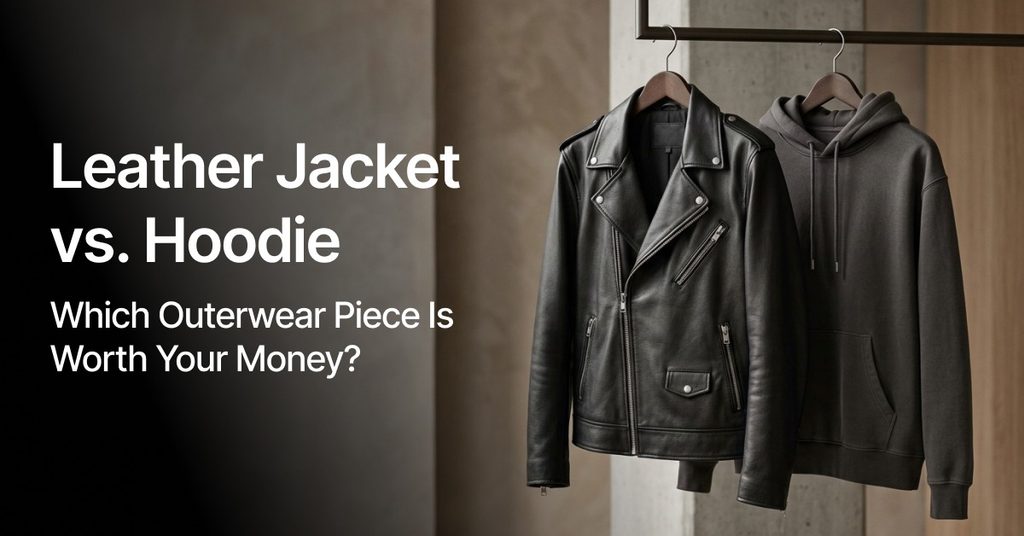
When cool weather hits across the United States, whether you are dealing with crisp autumn winds in Chicago, foggy coastal evenings in San Francisco, or chilly nights in New York, your outer layer sets the tone for your whole outfit. For most men building a functional wardrobe, the choice usually comes down to two staples: the classic cotton hoodie and the genuine leather jacket.
One offers soft, effortless comfort for low-key days; the other brings structure, protection, and instant style authority. But if you have a budget set aside for your next clothing purchase, which piece gives you the best return on investment?
Below is an honest breakdown comparing traditional hoodies and leather jackets across durability, weather resistance, styling versatility, and long-term cost-per-wear.
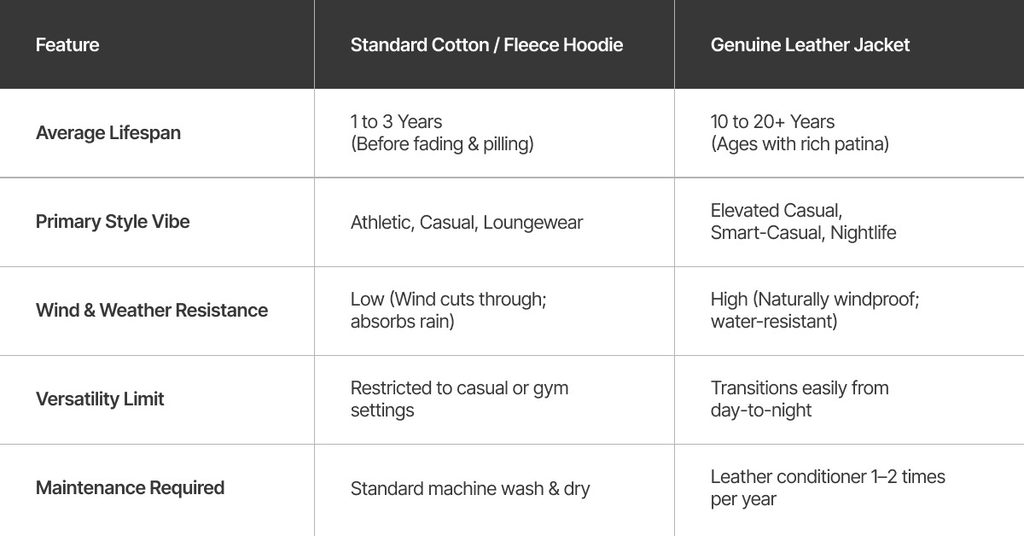
Head-to-Head Comparison: Cotton Hoodie vs. Leather Jacket
1. The Standard Cotton Hoodie: Maximum Comfort, Short-Lived Value
The classic fleece hoodie is an essential component of modern American streetwear and daily loungewear.
Why It Works (Pros):
- Unbeatable Cozy Comfort: Soft brushed fleece makes it perfect for relaxing at home, running fast errands, or traveling.
- Low Initial Price: High-quality cotton hoodies are easy on the wallet upfront ($50–$90).
- Low-Maintenance Wash: Throw it in the washing machine without needing specialized leather care.
The Drawbacks (Cons):
- Short Lifespan: Repeated washing causes fabric pilling, stretched cuffs, faded colors, and lost structural shape after 12 to 18 months of regular use.
- Zero Dress-Up Capability: You cannot wear a plain cotton hoodie to an upscale restaurant, a business casual office, or a formal date night without looking underdressed.
- Poor Weather Defense: Knitted fabric allows cold wind to blow right through and absorbs rainwater immediately.
If you are looking for soft, relaxed everyday layers for your laid-back outfits, browsing quality hoodies gives you reliable casual options for low-key days.
2. The Leather Jacket: Timeless Structure and Decades of Wear
A genuine leather jacket is not just a seasonal clothing item, it is an investment piece designed to last for decades.
Why It Works (Pros):
- Built to Last a Lifetime: Top-grain and full-grain leathers do not fray, tear, or pill like cotton. Instead of wearing out, real leather develops a rich patina over time that looks even better with age.
- Instant Style Upgrade: A leather jacket instantly elevates a basic outfit. Throwing one over a simple white t-shirt and dark jeans turns a plain look into a sharp, intentional style statement.
- Superior Windbreaker Performance: Dense leather naturally blocks cold gusts, keeping your core warm during windy fall and spring days without requiring heavy bulk.
Investing in handcrafted leather jackets ensures you acquire a high-impact outerwear piece that anchors your wardrobe through every season.
The Drawbacks (Cons):
- Higher Upfront Cost: High-grade leather requires a larger initial outlay ($200–$400+).
- Requires Basic Care: Should be stored on a padded hanger and treated with leather conditioner once a year to keep the leather soft.
3. The Math: Calculating Cost-Per-Wear (CPW)
To see which piece is truly worth your money, look past the initial price tag and use the Cost-Per-Wear formula:
COST-PER-WEAR FORMULA
Formula: Cost-Per-Wear (CPW) = Total Retail Price / Total Times Worn Over Lifespan
Scenario A: The $65 Cotton Hoodie
- Purchase Price: $65
- Expected Lifespan: 1.5 years (Approx. 100 wears before pilling, cuff stretch, or fading sets in)
- Real Cost-Per-Wear: $0.65 per wear (Plus you have to buy another replacement in year two).
Scenario B: The $280 Leather Jacket
- Purchase Price: $280
- Expected Lifespan: 10 years (Approx. 600 wears across autumn, winter, and spring seasons)
- Real Cost-Per-Wear: $0.46 per wear (With zero loss in structural quality or visual appeal).
Over a multi-year timeline, the leather jacket costs less per wear while offering significantly higher style value.
4. US Climate & Regional Styling Guide
- East Coast & Midwest (NYC, Philadelphia, Chicago): Use your leather jacket as a primary coat during crisp autumn months, or layer a lightweight hoodie underneath it during winter for maximum warmth and a timeless street-style aesthetic.
- West Coast (LA, San Diego, Seattle): A leather jacket is the ideal year-round night-out layer for coastal breezes, while hoodies are best reserved for foggy morning coffee runs.
- The Sunbelt & South (Texas, Atlanta, Miami): Lightweight leather jackets provide clean evening style without overheating during milder winters.
Weather shifts fast across US regions, so it’s worth checking the New Arrival collection for the latest jackets and layering pieces cut for the current season.
5. Frequently Asked Questions
Q1: Can you wear a hoodie under a leather jacket?
Yes! Layering a thin cotton hoodie underneath a structured leather jacket is one of the most popular, time-tested streetwear combinations in North America. It gives you the warmth and hood coverage of a sweatshirt with the rugged wind protection of leather.
Q2: Is a leather jacket warmer than a heavy fleece hoodie?
In windy conditions, yes. While fleece retains heat, wind easily penetrates knitted fabrics. Leather acts as a natural windblocker, keeping you noticeably warmer when temperatures drop and the wind picks up.
Q3: Which piece is better for a business casual setting?
A clean, well-fitted leather jacket paired with a button-down shirt or sweater fits right into modern tech offices and creative business casual environments across the US. A standard cotton hoodie is generally too casual for most workplaces.
6. Final Verdict: Which One Should You Buy?
Choose the Normal Hoodie If: You need an affordable, comfortable layer strictly for lounging around the house, running quick morning errands, or heading to the gym.
Choose the Leather Jacket If: You want a durable, windproof statement piece that elevates your overall look, outlasts multiple basic sweatshirts, and delivers lower cost-per-wear over time.
