

Key Takeaways
- Look beyond the asking price by evaluating flood risk, insurance, permits, and construction quality.
- Review total ownership costs, including taxes, maintenance, and waterfront expenses.
- Inspect waterfront features, storm readiness, and building records before buying.
- Compare local market data and neighborhood-specific conditions rather than broad averages.
- Choose a home that balances lifestyle, long-term value, and practical ownership.
Coastal living can deliver ocean breezes, outdoor recreation, water views, and a strong sense of place. It can also introduce questions that are easy to overlook during an exciting showing. Buyers need to assess more than finishes, beach access, and the asking price. Flood exposure, construction details, insurance availability, permits, and year-round practicality all shape the true cost and long-term value of a coastal home.
For buyers evaluating Northeast Florida communities, Ponte Vedra Beach real estate agents Christie’s International Real Estate First Coast can be a useful local resource. CIRE First Coast is a Northeast Florida brokerage affiliated with Christie’s International Real Estate, with property search, valuation, and advisor services spanning areas including Ponte Vedra Beach, Atlantic Beach, Jacksonville, Amelia Island, and Nocatee. Local knowledge matters when homes only a few miles apart can have very different storm, insurance, and resale considerations.
1. Start With The Location, Not The Listing Photos
Begin by studying the home’s precise setting. Is it near the ocean, Intracoastal Waterway, river, marsh, canal, or a low-lying drainage area? Each setting can influence wind exposure, flooding patterns, maintenance needs, privacy, and access to water.
Also consider everyday convenience. Drive the routes to grocery stores, medical care, schools, parks, restaurants, and major roads. Visit at different times, including a busy weekend and a quieter summer weekday. A home that feels perfect for a short vacation should also work for errands, commuting, visitors, and emergency planning.
2. Check The Property’s Flood Exposure
Never rely solely on a neighborhood’s reputation or a seller’s general description of flood conditions. Review the flood designation for the exact address, then ask about elevation, drainage, finished-floor height, prior water intrusion, and any flood claims or repairs.
A property outside a designated high-risk zone can still experience drainage problems, heavy-rain flooding, tidal effects, or changing conditions. Confirm details with the lender, insurance professional, local building department, and a qualified inspector. Ask for documents rather than relying on verbal assurances.
3. Review Storm-Ready Construction Features
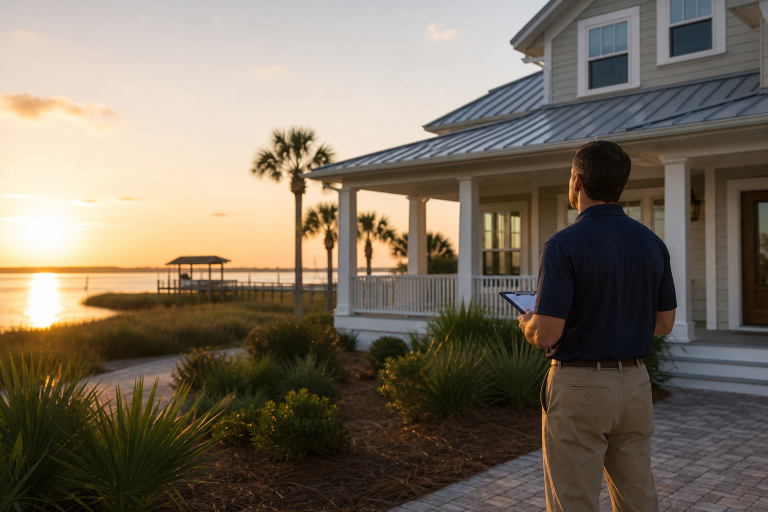
Ask when the house was built and what major improvements have been completed since then. Newer construction can include stronger safeguards, but age alone does not determine quality. A well-maintained older home with thoughtful upgrades may be more resilient than a newer home with deferred maintenance.
Features Worth Reviewing
- Roof age, material, shape, condition, and remaining useful life.
- Roof-to-wall connections, roof-deck attachment, and secondary water barriers.
- Impact-rated windows and doors, storm shutters, and garage-door reinforcement.
- Evidence of moisture intrusion, damaged soffits, deteriorated exterior seals, or past storm repairs.
A wind-mitigation inspection can help document qualifying features for insurance and reveal areas that deserve closer attention. It should complement, not replace, a complete home inspection.
4. Read The Insurance Picture Before Making An Offer
Request actual insurance quotes for the specific property as early as possible. Do not estimate coverage from a neighbor’s policy or an online average. Review homeowners, wind, flood, liability, and hurricane deductible provisions. Ask whether the roof, electrical system, plumbing, pool, seawall, or claims history could affect eligibility or premiums.
Build a full ownership budget that includes property taxes, HOA dues, utilities, landscaping, pest control, roof reserves, and waterfront maintenance. A lower purchase price may not result in lower monthly costs if insurance or ongoing repairs are significantly higher.
5. Verify Building Rules And Permit Records
Search permit records for roofs, additions, pools, electrical work, major renovations, docks, seawalls, and structural repairs. Confirm that permits were finalized and closed when required. Unpermitted or incomplete work can create financing, insurance, safety, and resale issues later.
Review HOA documents, deed restrictions, architectural rules, rental limitations, and any elevation or reconstruction requirements.
6. Give Waterfront Features A Closer Look
Waterfront amenities deserve their own inspection plan. Request records for docks, lifts, seawalls, bulkheads, pools, and irrigation systems. Confirm permits, maintenance history, lift capacity, water depth, and whether repairs are anticipated. If boating is important, examine the route to open water, bridge clearances, tides, and the practical time needed to reach your preferred destination.
A riverfront home, a marsh-front home, a canal property, and an oceanfront property may offer very different experiences. Water access can affect insurance, maintenance, privacy, view protection, and the pool of future buyers.
7. Compare Lifestyle Value With Resale Value
Ask whether the home supports your actual routine. Consider storage, parking, guest space, outdoor living, walkability, commute time, healthcare access, and recreation. Flexible floor plans, practical storage, a usable outdoor area, and convenient access often appeal to a broader range of buyers than a dramatic view alone.
Then think five, ten, or fifteen years ahead. Who is the likely next buyer, and what will matter most to them? A property with a strong lifestyle fit and fewer avoidable ownership surprises is usually easier to position when it is time to sell.
8. Use Local Market Data Before Setting A Budget
Review recent closed sales, not only active listings. Compare homes within the same neighborhood or closely matched submarket, since water access, lot size, elevation, renovations, views, and beach proximity can make broad price-per-square-foot comparisons misleading.
Look at days on market, price reductions, inventory, and the gap between original list prices and final sale prices. This helps buyers distinguish a realistic budget from a listing-driven expectation.
9. Build A Smart Inspection Plan
- Order a complete home inspection early in the contract period.
- Add wind-mitigation, roof, moisture, mold, drainage, and specialty inspections as needed.
- Use qualified professionals for seawalls, docks, pools, elevators, generators, and lifts.
- Review all findings before the inspection and financing deadlines expire.
10. Choose A Local Advisor With Area Knowledge
Coastal buyers benefit from professionals who understand individual streets and neighborhoods, not just regional averages. Ask how an advisor evaluates flood exposure, insurance questions, permits, waterfront features, comparable sales, and likely resale demand. The best guidance helps you see both the enjoyment and the obligations attached to a property.
Common Questions Buyers Should Ask
- What is the exact flood zone, elevation, and prior flood history?
- How old is the roof, and are repair or replacement records available?
- Can the home be insured at a cost that fits the long-term budget?
- Were renovations properly permitted and closed?
- Are there HOA, rental, dock, or renovation restrictions?
- What are the annual taxes, insurance costs, assessments, and maintenance expenses?
- How have comparable homes performed during the past year?
Conclusion: Buy The Whole Property Story
A coastal home should be judged by more than its view. Take time to examine flood exposure, construction quality, insurance, permits, inspections, lifestyle fit, and resale appeal. Slowing down to gather records and consult qualified local, licensed professionals can lead to a more confident long-term purchase decision for an appealing coastal listing.
