
Key Takeaways
- A short visual electrical check can help Airway Heights homeowners notice hazards before they become emergencies.
- Warm outlets, flickering lights, buzzing sounds, damaged cords, and repeatedly tripped breakers are warning signs worth documenting.
- Seasonal conditions in Eastern Washington, including winter heating demand, summer cooling use, wind, and outdoor projects, can place extra strain on home electrical systems.
- Homeowners should observe and record concerns, not remove panel covers, open outlets, or attempt energized repairs.
- Smoke, sparks, burning odors, shock incidents, water near electricity, and downed lines require immediate caution and qualified help.
Whether your Airway Heights home is a newer build near the growing commercial corridors or an older property with years of additions and upgrades, a quick electrical walk-through can reveal important clues. If you notice recurring issues, a qualified electrician in Airway Heights, WA can help determine whether the concern involves an overloaded circuit, aging equipment, moisture, or a needed safety upgrade.
This check is not a repair project. The goal is to notice visible, audible, or heat-related warning signs without touching exposed wiring, removing covers, or resetting a breaker repeatedly. Fifteen focused minutes can give you a useful list of concerns to monitor or discuss with a professional.
1. Why a Quick Electrical Check Matters
Electrical problems do not always begin with a dramatic failure. A light that flickers when the microwave starts, an outlet that feels warm, or a breaker that trips whenever two high-demand appliances run can signal a circuit that needs attention. The home electrical safety checklist from the Consumer Product Safety Commission reinforces the value of watching for damaged cords, overloaded outlets, and other everyday hazards.
In Airway Heights, changing seasonal loads can make small issues easier to spot. A circuit that handles normal use in spring may struggle when portable heaters, holiday lighting, cooking appliances, or air-conditioning equipment are added later in the year. Write down what happens, where it happens, and which devices were operating at the time.
When a concern goes beyond a simple observation, homeowners can arrange residential electrical services in Spokane Valley to investigate the issue safely rather than relying on temporary workarounds such as additional power strips or extension cords.
2. What to Do Before Starting
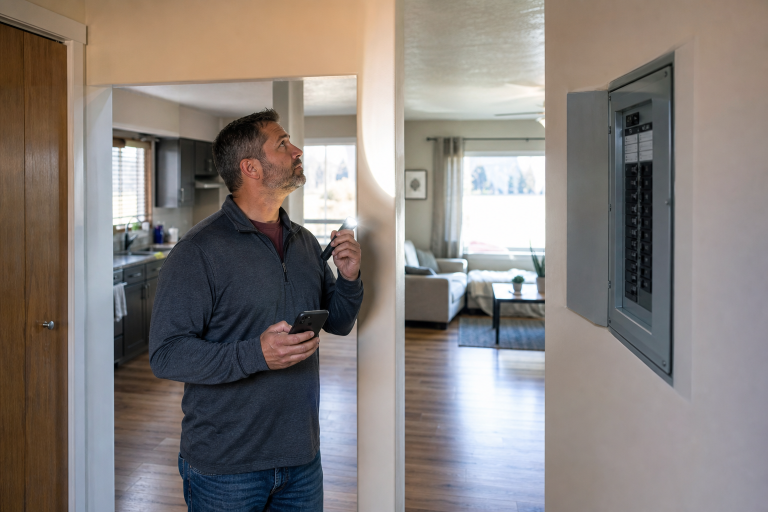
Start with a phone, flashlight, and notepad. Keep your hands dry, wear stable footwear, and keep children and pets away from the areas you are checking. Do not remove outlet covers, light fixtures, or the electrical panel cover. If you see exposed wiring, scorch marks, water intrusion, or anything that appears damaged, stop the inspection in that area and keep your distance.
3. Room-by-Room Warning Signs
Kitchen
Look at outlets near countertops and major appliances. Cracks, looseness, discoloration, unusual warmth, or plugs that fall out easily deserve attention. Avoid running high-wattage appliances through power strips, and keep cords away from sinks, hot cooktops, and areas where they can be pinched behind appliances.
Bathroom and Laundry Areas
Water and electricity are a dangerous combination. Check for damaged hair-dryer, washer, dryer, and iron cords, especially near plugs. Outlets near sinks, tubs, and laundry equipment should have appropriate ground-fault protection. Never use extension cords across wet floors or near standing water.
Bedrooms and Living Areas
Notice flickering fixtures, buzzing switches, loose wall plates, or chargers that become excessively hot. Check that cords are not trapped beneath rugs, doors, or heavy furniture. Avoid connecting one power strip or extension cord to another, since daisy-chaining can overload equipment and create excess heat.
4. What to Look for Around the Electrical Panel
Your electrical panel should remain accessible and clear of storage. From the outside only, look for rust, water marks, a burning odor, buzzing, excessive warmth, or a door that will not close properly. Make note of breakers that trip often, will not reset, or appear connected to a circuit with unexplained power loss. Do not remove the cover or attempt to tighten any connections yourself.
5. Seasonal Electrical Safety Tasks
Spring and Summer
Before yardwork begins, inspect outdoor cords, outlet covers, and plug connections for damage caused by winter weather. Summer can add demand from fans, portable air conditioners, freezers, patio equipment, and garage tools. Use only equipment rated for outdoor conditions, and keep portable electrical devices well away from sprinklers, wet grass, and pools.
Fall and Winter
Cold Airway Heights winters can increase reliance on space heaters and indoor lighting. Inspect heater cords before use, plug heaters directly into wall outlets, and keep them clear of bedding, curtains, paper, and furniture. Test smoke and carbon monoxide alarms, replace weak batteries, and make sure flashlights and backup charging options are ready before severe weather arrives.
6. Outdoor Electrical Safety
Before using ladders, trimming trees, or handling long tools, look overhead for power lines. Stay well away from downed lines and assume they are energized, even if they appear inactive. For fence posts, landscaping, mailboxes, drainage work, or tree planting, contact the service to call 811 before digging so underground utilities can be marked before work begins.
7. When to Stop and Call for Help
Prompt professional attention is appropriate when you smell burning, see smoke or sparks, find melted plastic, experience a shock, or notice water near electrical equipment. The same is true for breakers that trip repeatedly without a clear explanation, damaged service equipment, and any issue involving a downed utility line. Do not keep resetting a breaker to “see if it holds.”
8. What to Do During an Electrical Emergency
- Move people away from the suspected hazard without touching damaged equipment.
- Do not touch someone who may still be in contact with an energized source.
- Call 911 for fire, smoke, injury, or immediate danger.
- Leave the home if smoke or fire is present, and do not re-enter until emergency personnel say it is safe.
- Report downed lines or broader service problems to the utility provider.
9. How to Build a Simple Yearly Routine
Keep the process manageable. Monthly, inspect frequently used cords, test ground-fault devices, and check alarms. Seasonally, review heating or cooling loads, outdoor equipment, and emergency supplies. Once a year, consider recurring breaker issues, older wiring, planned renovations, and any changes in how your household uses power. After high winds, flooding, lightning, or a lengthy outage, perform another visual check before returning to normal routines.
Conclusion
A 15-minute electrical safety check can help Airway Heights homeowners catch small warning signs before they become more serious. Observe carefully, record concerns, and avoid risky do-it-yourself repairs. When heat, smoke, water, damaged wiring, repeated power loss, or shock are involved, the safest next step is qualified help.
