
A diamond ring should look beautiful when it is new and feel comfortable long after the proposal, ceremony, or special occasion. Whether you are comparing a ready-made ring or considering custom made-to-order designs, the most useful starting point is to think beyond carat weight. Shape, cut style, setting height, metal coverage, and daily routine all affect how a ring looks and wears. Finger size, preferred jewelry style, and whether the wearer usually stacks rings can also influence which proportions feel most natural.
The right choice is personal, but it should also be practical. A ring worn while typing, traveling, exercising, caring for children, or working with your hands may need different features than a ring reserved for occasional wear. Taking time to compare those needs can make the final design feel more intentional. It can also help buyers avoid choosing a design that looks appealing in a display case but is inconvenient in everyday use.
Why Diamond Shape Matters
The diamond shape is the outline visible from above, and it has a major effect on a ring’s personality. A round diamond feels balanced and familiar, while an oval, marquise, or pear can create a longer visual line across the finger. Square and rectangular stones lend a more geometric look, while softly rounded cushion shapes can feel romantic or vintage-inspired. The shape can also affect how wide or narrow the center stone appears when viewed beside the band.
Two diamonds with the same carat weight can also look noticeably different in face-up size because their measurements and proportions vary. Elongated shapes often cover more length on the finger, while deeper stones may hold more weight below the surface. Consider the measurements, not just the carat number, when comparing options. Looking at millimeter dimensions is particularly helpful when comparing stones with different outlines, since it provides a more direct sense of visible size.
Diamond Shape Vs. Cut
Shape and cut are related but different. Shape describes a diamond’s silhouette, such as round, oval, pear, cushion, or square. Cut style refers to the arrangement and angles of its facets, which influence how light moves through the stone. The outline and facet arrangement of a diamond both deserve attention because stones with similar outlines can have very different visual character.
Brilliant-style facet patterns generally produce many small flashes of light. Step cuts, including emerald cuts, use larger linear facets and have a cleaner, more mirror-like appearance. Neither is automatically better. The decision comes down to whether the wearer prefers lively sparkle or a calmer, architectural look. Lighting conditions can also change the impression: a diamond may look different in daylight, indoor lighting, and direct spot lighting.
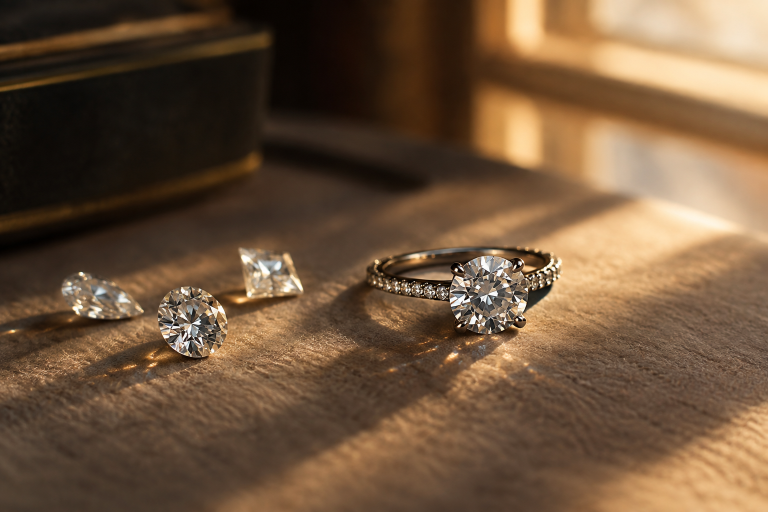
Popular Diamond Shapes In 2026
Round Brilliant
A round brilliant is versatile, easy to style, and well-suited to solitaire, halo, and three-stone designs. It is a dependable option for someone who wants a classic silhouette with strong light performance. Its symmetrical outline also makes it relatively easy to pair with many straight or curved wedding band styles.
Oval
Ovals combine a soft outline with an elongated profile. Review the stone in person or through detailed imagery when possible, since some ovals show a darker bow-tie area across the center. The amount of visible bow-tie contrast varies from stone to stone, so it is worth evaluating each diamond individually rather than relying on specifications alone.
Emerald
Emerald cuts feature broad step facets, cropped corners, and an orderly appearance. Their open facets can make color and clarity characteristics easier to see, so careful visual review is especially important. A classic rectangular emerald cut can also emphasize clean lines in a simple metal setting.
Cushion
Cushion diamonds have softened corners and can be square or rectangular. Their proportions and facet patterns vary widely, which gives buyers room to find a look ranging from pillowy and traditional to crisp and contemporary.
Pear, Marquise, Princess, And Radiant
Pear and marquise diamonds offer distinctive elongated silhouettes, but their pointed ends should be protected by the setting. Princess cuts bring sharp, square lines, while radiant cuts combine a rectangular or square outline with a brilliant-style look. Examine the corner protection carefully for any stone with vulnerable points. Orientation matters as well: pear- and marquise-shaped stones are often worn lengthwise, but the preferred orientation should be based on the wearer’s taste and comfort.
Match The Ring To Daily Life
Before choosing a setting, consider how often the ring will be worn and what it may encounter. Regular gym use, frequent travel, hands-on work, gardening, and childcare can all make snagging and impact more likely. A lower setting or one with more metal around the diamond can be a sensible choice for an active routine. Removing a ring before activities that put pressure on the setting, such as heavy lifting, can also help reduce avoidable wear.
For example, someone who lifts weights or works in a clinical, food-service, or craft environment may prefer a low-profile bezel-set oval instead of a tall prong-set solitaire. The lower design can sit closer to the finger, reducing exposed edges while still letting the chosen shape remain visible.
Choose A Setting That Fits
Prong Settings
Prongs hold a diamond with small metal supports, leaving much of the stone visible. They suit many styles, but prongs should be inspected periodically for wear or loosening. More prongs can offer additional points of contact, while the specific design should still allow the stone to be cleaned and checked easily.
Bezel Settings
A bezel surrounds all or part of the diamond’s edge with metal. This can create a smooth outline and provide extra protection, particularly for pointed shapes and people who prefer a streamlined ring.
Halo And Three-Stone Settings
Halo designs use smaller stones around the center diamond to add visual width and sparkle. Three-stone rings use side stones to create a broader profile. Both can be striking, though buyers should consider how the ring will sit next to a wedding band.
Low-Profile And Flush Settings
Low-profile settings keep the center stone closer to the finger. Flush settings place the diamond into the metal itself. These options can be practical for daily wear, although they create a subtler presentation than a raised center stone.
Balance Shape, Quality, And Budget
Carat weight is only one part of the comparison. Look at the diamond’s measurements, cut style, color, clarity, and overall appearance alongside its grading documentation. A slightly smaller diamond that appears bright and balanced may be more appealing than a larger stone with less attractive proportions. Setting choices can also affect the budget, since a detailed halo or setting with numerous accent stones may require more labor and future maintenance than a simple solitaire.
Brilliant-cut diamonds can make small inclusions or warmth less noticeable because of their busy facet patterns. Step-cut diamonds tend to show more of what is inside the stone. Compare several diamonds with similar specifications, and prioritize the one that looks best to you rather than selecting by a single grade alone.
A Simple Buying Checklist
- Narrow the selection to two or three shapes that fit the wearer’s style.
- Decide whether everyday comfort requires a low, medium, or high setting profile.
- Review the exact stone’s measurements, video or images, and grading report.
- Check whether the center stone’s points and corners are properly protected.
- Try on, or visualize, the ring beside the intended wedding band.
- Ask about resizing, cleaning, repairs, production timing, and warranty terms.
- Review the return policy and seller disclosures before placing an order.
When reviewing reports and sales terms, use the details consumers should confirm before buying gemstones as a reminder to ask about treatments, quality descriptions, and written purchase policies.
Common Mistakes To Avoid
- Choosing a shape only because it is popular at the moment.
- Focusing on carat weight without comparing proportions and light performance.
- Overlooking the setting height and how often the ring may catch on clothing.
- Ignoring work, hobbies, and other real-life wear conditions.
- Assuming every shape receives the same type of cut assessment.
- Skipping the details on returns, resizing, maintenance, and repairs.
Questions To Ask Before Buying
- Is the diamond pictured the exact stone being sold?
- Does it include an independent grading report?
- How does the setting protect points, corners, and edges?
- Will the ring sit comfortably beside a wedding band?
- Can the ring be resized later, and are there design limits?
- What should happen if a prong loosens or a small accent stone is lost?
Final Thoughts
The best diamond shape is not necessarily the largest, rarest, or most discussed option. It is the one that reflects the wearer’s taste while matching their day-to-day life. By comparing shape, cut style, setting protection, comfort, and service terms, buyers can choose a ring that remains practical and meaningful well beyond shifting trends.
