
Key Takeaways
- Large trees need prompt attention when they develop a new lean, deep cracks, hanging limbs, decay, or root movement.
- Tega Cay, South Carolina, properties often have limited drop zones because homes, driveways, fences, and wooded lots are close together.
- Power lines, wet ground, storm damage, and nearby structures can substantially change the removal plan.
- Professional planning should cover access, work zones, controlled lowering, cleanup, and stump options.
- Homeowners should keep people and pets away from unstable trees rather than attempting risky cuts themselves.
Living along Lake Wylie gives Tega Cay, South Carolina, its appealing wooded character, but mature trees can also create difficult safety decisions. A large oak, pine, or hardwood that once provided privacy and shade may become a concern after high winds, saturated soil, lightning, or visible structural damage.
When a tree threatens a roof, driveway, fence, or neighboring property, homeowners need more than a quick cutting plan. Large tree removal specialists in Tega Cay can assess the tree’s condition, the available working space, and the safest way to handle heavy limbs and trunk sections.
Why Large Tree Removal in Tega Cay Needs Careful Planning
A mature tree cannot always be cut at the base and dropped in one direction. Its height, weight distribution, lean, internal condition, and branch layout can affect how it moves. In a Tega Cay backyard, the intended fall path may be blocked by a home, screened porch, pool area, retaining wall, landscaping, or a neighboring lot.
Weather and ground conditions matter as well. Rain can soften soil around roots, while wind can make suspended limbs and elevated work less predictable. A careful site review helps identify whether a tree can be dismantled from the ground or should be taken down in controlled sections.
For trees that need limbs reduced, trunks cut into manageable lengths, or hazardous growth removed from a constrained Tega Cay lot, large tree cutting services may provide a more appropriate scope of work than a full removal. The correct approach depends on the tree’s condition and what it could strike if it fails.
Warning Signs That a Tree May Be Unsafe
A visual check cannot replace an on-site professional assessment, but it can help a homeowner recognize issues that deserve attention. Changes in tree health, structure, and surroundings can all affect the potential for failure.
- A new lean or a lean that appears to be worsening.
- Deep trunk cracks, split leaders, or large broken limbs.
- Hollow areas, soft wood, cavities, or peeling bark around a damaged section.
- Dead branches hanging over a driveway, walkway, patio, or play area.
- Raised soil, exposed roots, or movement at the base of the tree.
- Fungal growth near the trunk base or root flare.
- Storm damage, including a broken top or partly detached limb.
- Branches contacting, rubbing against, or growing toward a building or utility line.
How Tega Cay, South Carolina, Locations Change the Risk
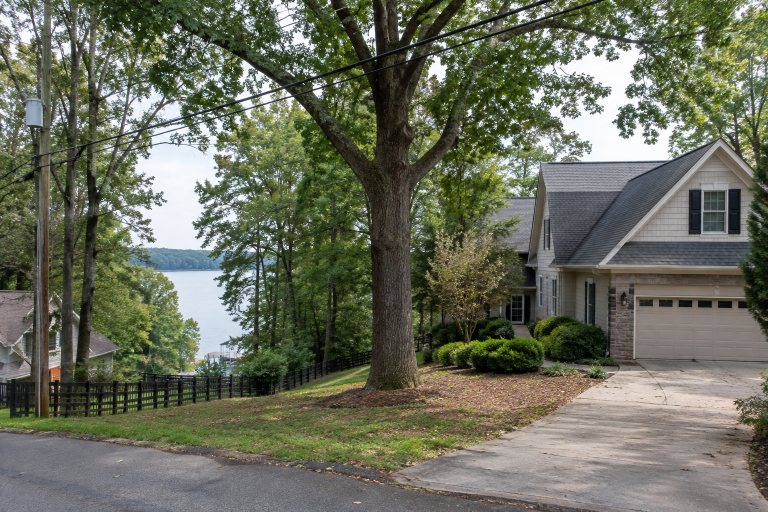
A tree in an open area may have room for a conventional removal plan. A tree beside a lakefront home, narrow side yard, cul-de-sac, or wooded property line may not. Nearby roofs, vehicles, sheds, sidewalks, decks, and gardens reduce the room available for falling material and equipment movement.
Many large trees near Tega Cay homes require sectional removal. Workers may first remove branches, then cut the trunk into smaller pieces that can be lowered or directed to a defined drop zone. This method can reduce the likelihood that a large section strikes a structure, but it must be selected based on the site and tree.
A Simple Pre-Removal Site Check
Before requesting an estimate, homeowners can gather useful information without entering a hazard area:
- Observe the trunk, roots, canopy, and largest limbs from a safe distance.
- Estimate the tree’s height and canopy spread.
- Note nearby homes, fences, paths, vehicles, and outdoor features.
- Identify overhead wires, streetlights, and other obstructions.
- Consider slopes, wet ground, mud, gates, and equipment access.
- Take clear photographs from several angles.
- Keep everyone away from hanging, cracked, or partly uprooted sections.
What a Professional Removal Plan Should Cover
A useful written plan identifies the tree’s likely failure points, worker and equipment access, cutting sequence, restricted areas, and protection for nearby property. It should also explain how brush, logs, and trunk pieces will be handled, whether stump grinding is included, and when the weather would require the work to stop.
Why Sectional Removal Can Be Safer in Tega Cay
Near Tega Cay homes, crews may use ropes, rigging, aerial lifts, or other suitable equipment to manage branches and trunk sections individually. Controlled lowering can be preferable to allowing heavy wood to fall freely when there is little room between the tree and a roof, fence, garden, or neighboring yard. The tree’s stability, available space, weather conditions, and access to equipment determine whether this technique is appropriate.
Power Lines and Other Hidden Hazards
Every overhead line should be treated as energized. OSHA identifies electrical contact, falling objects, chainsaws, equipment, and weather among important tree care safety hazards. Never pull on, cut, or climb limbs that touch or could reach a power line. Utility coordination and qualified workers are essential when electrical systems are involved.
Homeowners should also consider underground utilities before equipment is brought in, especially if stump work or heavy machinery is planned. Work should pause during lightning, high winds, or conditions that make the tree or ground unsafe.
DIY Removal: When It Becomes a Poor Choice
Pruning a small, reachable branch is very different from removing a mature or damaged tree. Chainsaws, ladders, ropes, falling limbs, and heavy trunk sections create serious risks. Damaged wood can shift unexpectedly, and a mistake can injure people, damage property, or interrupt utility service. Trees near occupied homes, roads, wires, or confined spaces should be handled by trained professionals.
Questions to Ask Before Hiring a Tree Crew
- What hazards did the site review identify?
- How will nearby structures and landscaping be protected?
- Will the tree be removed in sections?
- How will large limbs and trunk pieces be lowered?
- Who handles utility coordination if lines are nearby?
- Does the estimate include hauling and final cleanup?
- Is stump grinding priced separately?
- What happens if rain or wind makes conditions unsafe?
Cleanup and Stump Options
Confirm whether the scope includes chipping brush, hauling logs, removing sawdust, and grinding the stump. A remaining stump can affect mowing, future planting, walking routes, and construction plans. After removal, inspect the area for low spots, disturbed mulch, compacted ground, and damage to nearby plants or hardscape.
Common Questions About Large Tree Removal in Tega Cay
Can a Large Tree Near a House Be Removed Safely?
It may be possible when the crew uses a site-specific plan, controlled cuts, and appropriate equipment. The tree’s condition and available space guide the method.
Does a Leaning Tree Always Need to Be Removed?
No. The direction and recent change of the lean, root condition, trunk strength, and nearby targets all matter. A newly leaning tree or one with soil movement deserves prompt evaluation.
Is Stump Grinding Always Needed?
Not always. The decision depends on the stump’s location, future landscaping plans, mowing needs, and whether it creates a trip hazard.
Final Checklist for Tega Cay Homeowners
- Stay clear of split trunks, hanging limbs, and lifted roots.
- Keep children, pets, and visitors outside the work area.
- Do not attempt tree work near power lines.
- Photograph visible warning signs from a safe location.
- Request a clear written scope covering removal, cleanup, and stump work.
- Ask how the crew will protect your home, landscape, and neighboring property.
Conclusion
Large tree removal in Tega Cay, South Carolina, is safest when it begins with careful observation and a realistic plan. Tree condition, tight residential spaces, utility lines, wet ground, and cleanup needs all influence the right method. Addressing warning signs early can help protect people, property, and the established landscape that makes the community distinctive.
