
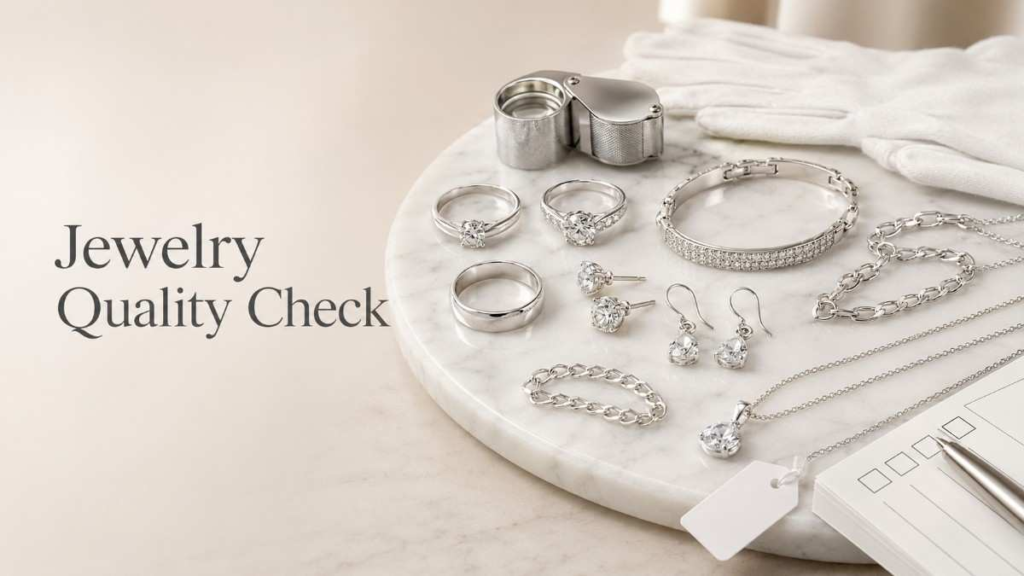
Jewelry may look beautiful at first glance, but small quality issues can quickly turn into returns, complaints, and lost trust. A loose stone, weak clasp, rough edge, wrong size, or dull finish can affect the customer’s full experience with the product.
For retailers, checking jewelry before selling is not just a quality step. It is a brand protection step. Whether you sell sterling silver rings, CZ earrings, pendants, bracelets, chains, or gemstone jewelry, a simple inspection process can help you deliver better products and build long-term customer confidence.
If you buy wholesale jewelry, this quality check becomes even more important because one defective batch can affect many customer orders.
Why Quality Checks Matter in Wholesale Jewelry
Retailers often depend on suppliers for product quality, but the final responsibility before selling is still with the store. Customers usually judge the retailer, not the manufacturer, when a piece arrives damaged or poorly finished.
A good quality control process helps retailers:
- Reduce returns and exchanges
- Improve customer reviews
- Build trust with repeat buyers
- Avoid selling damaged or mismatched pieces
- Spot supplier problems early
- Maintain a professional brand image
Jewelry is a detail-focused product. Customers notice shine, finishing, comfort, and fit very quickly.
1. Loose or Missing Stones
Loose stones are one of the most common jewelry quality issues retailers should check before selling. This problem is often found in CZ rings, gemstone earrings, tennis bracelets, halo pendants, and pave designs.
Before selling, gently inspect the stone setting. The stone should sit straight and should not move when touched lightly.
Check for:
- Loose center stones
- Missing small side stones
- Uneven stone placement
- Bent or open prongs
- Stones sitting too high or too low
- Color mismatch in gemstone pieces
A loose stone may look minor during inspection, but after a customer wears the item once or twice, it can fall out and create a serious complaint.
2. Weak Clasps and Closures
Clasps are small, but they are one of the most important parts of bracelets, necklaces, anklets, and chains. A weak clasp can make the entire piece unusable.
Retailers should test every closure before selling. Open and close the clasp a few times to make sure it works smoothly and holds firmly.
Common clasp issues include:
- Lobster clasp not closing fully
- Spring ring clasp feeling loose
- Box clasp not locking properly
- Toggle clasp slipping out easily
- Hook clasp bent out of shape
- Safety lock not snapping into place
Also check the jump rings near the clasp. If they are slightly open, the chain or bracelet can break during normal use.
3. Tarnish, Discoloration, or Uneven Plating
Finish is one of the first things customers notice. Sterling silver jewelry should look clean and bright, while gold-plated, rose-tone, black-tone, or rhodium-plated jewelry should have even color across the piece.
When checking wholesale jewelry, look closely at edges, corners, and areas around stones because plating often wears or appears uneven there first.
Look for:
- Yellow spots on silver jewelry
- Black marks or dull patches
- Uneven gold or rose plating
- Faded edges
- Over-dark oxidized areas
- Different colors between matching pieces
If the product is described as high polish, anti-tarnish, or rhodium plated, the finish should support that claim.
4. Scratches, Dents, and Rough Edges
Scratches and dents can make new jewelry look used. This is especially noticeable on plain rings, bangles, smooth pendants, hoop earrings, and polished silver pieces.
Retailers should inspect each item under bright light before adding it to inventory or shipping it to a customer.
Check for:
- Surface scratches
- Small dents
- Rough casting marks
- Sharp corners
- Uneven polishing
- Tool marks near stones or joints
Smooth finishing is not only about appearance. It also affects comfort, especially for rings, earrings, bracelets, and toe rings.
5. Incorrect Size or Product Measurement
Wrong measurements can lead to unhappy customers, especially in online selling. A ring that does not match the listed size or a chain that is shorter than described can quickly cause returns.
Retailers should verify important product measurements before creating listings.
Measure and confirm:
- Ring size
- Bracelet length
- Chain length and width
- Pendant height and width
- Hoop diameter
- Earring drop length
- Charm size
- Product weight
Accurate measurements help customers make better buying decisions and reduce confusion after delivery.
6. Weak Soldering or Poor Joint Strength
Some jewelry defects are not visible from the front. Weak soldering often appears near links, bails, earring posts, bracelet joints, and charm connectors.
A piece may look fine in photos but break easily if the joint is weak.
Inspect these areas carefully:
- Pendant bail
- Chain end caps
- Bracelet links
- Earring posts
- Hoop hinges
- Charm connectors
- Ring shank joints
If any part bends too easily, feels loose, or shows a visible crack, the item should not be sold until it is repaired or replaced.
7. Earring Back and Post Problems
Earrings need extra attention because fit and comfort are very important. A bent post, loose push back, or weak leverback closure can make the earrings difficult to wear.
Check for:
- Straight posts
- Tight butterfly backs
- Smooth fishhook wires
- Secure leverback closures
- Huggie hoops that click properly
- Matching left and right earrings
For stud earrings, both pieces should sit at the same angle. Uneven earrings can make the product look poorly made.
8. Mismatched Pairs or Sets
Customers expect pairs and sets to match. This matters for earrings, bracelet sets, jewelry sets, gemstone pairs, pearl jewelry, and charm collections.
Common mismatch issues include:
- One earring longer than the other
- Stone color difference
- Uneven polish
- Different plating tones
- Shape not matching
- One side looking heavier than the other
Before selling, place both pieces side by side and compare them carefully.
9. Missing or Unclear Metal Stamp
For sterling silver and precious metal jewelry, stamps such as 925, S925, 10K, or 14K are important trust signals. If a product is listed as 925 sterling silver, the stamp and supplier information should support that claim.
Retailers should check whether the hallmark is present, readable, and consistent with the listing.
Never claim a metal purity unless it is verified. Accurate product information protects both the customer and the retailer.
10. Poor Packaging and Presentation
Packaging is part of the customer experience. Even a good jewelry piece can feel low quality if it arrives tangled, dusty, scratched, or packed carelessly.
Before shipping or displaying jewelry, check that the product is clean and properly packed.
Packaging checklist:
- Jewelry is clean and polished
- Chain is not tangled
- Earrings are paired correctly
- Product tag or SKU is correct
- Stones are protected
- Anti-tarnish pouch is included if promised
- Box or pouch looks neat
Good packaging helps reduce damage and improves the customer’s first impression.
Quick Jewelry Quality Control Checklist for Retailers
Before selling, retailers should check:
- Stone security
- Clasp strength
- Surface polish
- Plating color
- Scratches and dents
- Ring, chain, and bracelet size
- Earring backs and posts
- Joint and solder strength
- Matching pairs
- Hallmark or metal stamp
- Packaging and SKU label
This simple checklist can prevent many common customer complaints.
Final Thoughts
Jewelry quality control does not need to be complicated, but it must be consistent. A few minutes of inspection can save retailers from returns, bad reviews, and customer disappointment.
Before selling any piece, check the stones, clasp, finish, sizing, joints, and packaging. These small details make a big difference in how customers experience your brand.
Retailers working with a reliable wholesale jewelry suppliers should still complete their own final inspection before listing or shipping products. That final check is what helps protect your store’s reputation and keeps customers coming back.
