
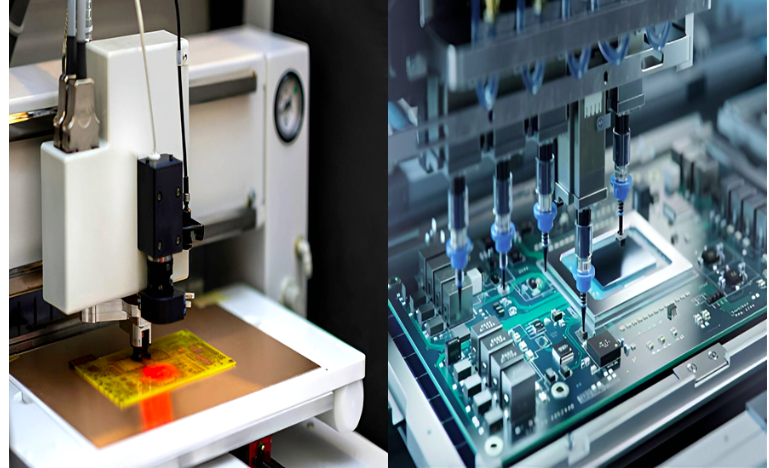
If you’ve ever designed a circuit board and needed just a few copies made — not thousands, just a handful — then you’ve already brushed up against the concept of small batch PCB assembly. Whether you’re a startup building your first product prototype, a hobbyist testing a new design, or an engineer validating a concept before mass production, small batch PCB assembly is likely the path you’ll take.
In this article, we’ll break down what small batch PCB assembly is, why it matters, how it works, and what to look for when choosing a provider.
What Is Small Batch PCB Assembly?
PCB stands for Printed Circuit Board — the green (or sometimes blue, red, or black) boards you see inside almost every electronic device. These boards hold and connect electronic components like resistors, capacitors, microchips, and more.
Small batch PCB assembly refers to the process of manufacturing and assembling a limited quantity of these boards — typically anywhere from 1 to 500 units. Unlike mass production runs that churn out tens of thousands of identical boards, small batch assembly is all about flexibility, speed, and lower upfront costs.
Think of it like the difference between a bakery making 10 custom cakes versus a factory producing 10,000 standard ones. Both are valid, but they serve very different needs.
Who Needs Small Batch PCB Assembly?
Small batch PCB assembly is used across a wide range of industries and by many types of people:
Startups and entrepreneurs often need a working prototype to show investors or test with early customers. They can’t afford the high setup costs of large production runs, and they may need to make design changes quickly.
Research and development teams frequently need small quantities of boards for testing new technologies, running experiments, or validating new product concepts before committing to larger manufacturing volumes.
Hobbyists and makers who enjoy building custom electronics — from home automation devices to custom gaming peripherals — often need just a few units for personal use or small community projects.
Medical and industrial equipment manufacturers sometimes need specialized boards in low quantities due to the highly customized nature of their products.
In all these cases, the common thread is the same: you need real, functional PCBs, but you don’t need — or can’t yet justify — a full production run.
How Does Small Batch PCB Assembly Work?
The process generally follows these steps:
1. Design Submission You start by submitting your PCB design files. These usually include Gerber files (which define the board layout), a Bill of Materials (BOM) listing all the components needed, and pick-and-place files that tell machines where each component goes on the board.
2. Component Sourcing The assembly provider either uses components you supply or sources them on your behalf. For small batches, sourcing can sometimes take longer since component suppliers may have minimum order quantities that exceed what you need.
3. PCB Fabrication Before assembly can begin, the bare PCB boards themselves need to be manufactured. This involves etching copper traces onto layers of fiberglass material to create the electrical pathways.
4. Assembly This is where the magic happens. Components are placed onto the board — either by automated pick-and-place machines (for surface-mount components) or by hand (for through-hole components). Solder paste is then applied and the boards go through a reflow oven to bond everything in place.
5. Inspection and Testing Quality control is crucial. Boards are visually inspected, and often undergo Automated Optical Inspection (AOI) or X-ray inspection to catch any soldering defects. Functional testing may also be performed to ensure the boards work as intended.
6. Delivery Once quality checks are passed, your assembled boards are shipped to you — ready to use.
Key Benefits of Small Batch PCB Assembly
Lower upfront cost: You’re not paying for thousands of units you don’t need yet. This makes it much easier to manage budgets, especially in the early stages of product development.
Faster turnaround: Many small batch providers offer quick-turn services, delivering boards in just a few days. This is ideal when time-to-market matters.
Design flexibility: If you find a flaw in your design after receiving the first batch, you can make changes without wasting a huge inventory of incorrectly made boards. Iteration is faster and cheaper.
Risk reduction: Testing with a small batch before scaling up means you catch problems early — before they become expensive mistakes at scale.
Access to advanced technology: Even at small volumes, reputable assembly providers offer access to high-quality manufacturing processes, including multi-layer boards, fine-pitch components, and advanced materials.
Things to Consider When Choosing a Small Batch PCB Assembly Provider
Not all assembly providers are the same. Here’s what to look for:
Minimum order quantities (MOQ): Some manufacturers still require a minimum number of boards. Look for providers who specialize in low-volume or prototype runs with no or very low MOQs.
Turnaround time: Check how quickly they can deliver. Express options are often available at a premium.
Component sourcing capabilities: Can they source hard-to-find components, or do you need to supply them yourself?
Quality certifications: Look for providers with ISO 9001 certification or IPC standards compliance, which indicates consistent quality management.
Communication and support: Especially for first-time buyers, having a responsive team to guide you through the process is invaluable.
Pricing transparency: Make sure there are no hidden fees. A good provider gives you a clear, itemized quote upfront.
Common Mistakes to Avoid
Incomplete design files: Missing or incorrect Gerber files, BOMs, or pick-and-place files are the most common cause of delays. Always double-check your files before submitting.
Ignoring DFM guidelines: DFM stands for “Design for Manufacturability.” Your design might look perfect on screen but be difficult or impossible to manufacture efficiently. Many providers offer free DFM checks — always take advantage of them.
Underestimating lead times for components: Some electronic components have long lead times, especially specialty chips. Factor this into your project timeline.
Choosing solely on price: The cheapest option isn’t always the best. Poor soldering, incorrect components, or missed quality checks can cost you far more in the long run.
The Future of Small Batch PCB Assembly
As electronics continue to shrink and become more complex, small batch PCB assembly is evolving too. Advances in automation are bringing down the cost of low-volume production. Online quoting tools now let you get pricing within minutes. And the rise of IoT (Internet of Things) devices means more companies than ever need custom circuit boards in small quantities.
This growing demand is pushing providers to offer faster, smarter, and more affordable services — making it easier than ever for innovators of all kinds to bring their ideas to life.
Conclusion
Whether you’re testing a new product idea, building a prototype, or simply need a small run of custom electronics, small batch PCB assembly makes it possible to get high-quality, fully functional circuit boards without committing to large production volumes. By understanding how the process works and what to look for in a provider, you can save time, reduce costs, and move your project forward with confidence. When you’re ready to take the next step, partnering with a reliable custom PCB assembly service can make all the difference between a good idea and a great product.
